Efficiency · 8 min read · Updated 2026-07-23
Renter-Friendly Energy Savings
Reduce apartment energy waste with reversible changes, measured loads, better shade timing, and landlord-approved fixes.
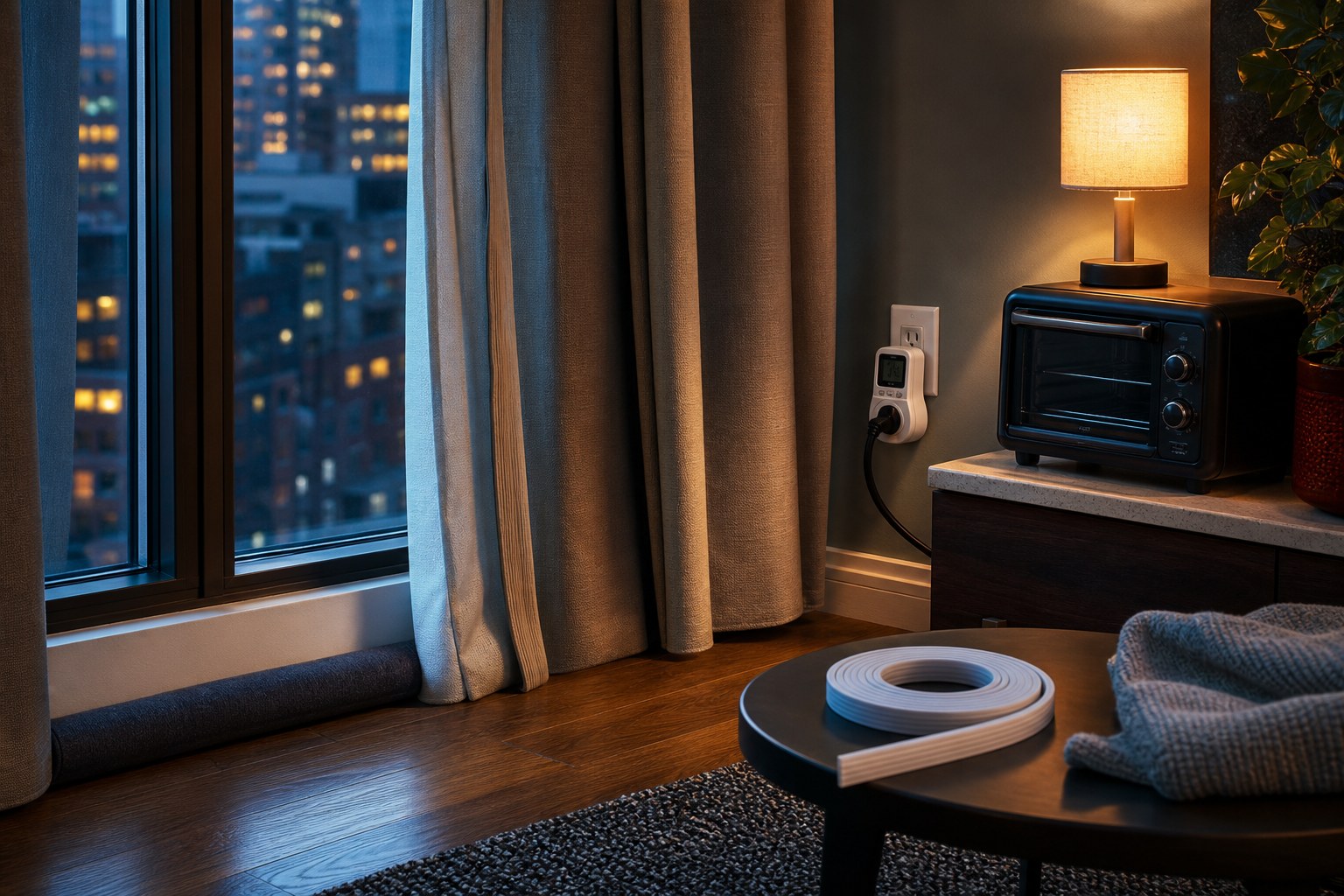
✓Use bills and a plug-in meter to identify the largest controllable loads.
✓Get permission before window film, weatherstripping, thermostat, or water-heater changes.
✓Shade timing and HVAC habits usually beat small standby-power tweaks.
✓Check utility and local rebate programs before buying efficiency gear.
Start with the bill and the lease
Compare at least several months of bills and note weather, occupancy, rate changes, and whether heating, cooling, or hot water is included in rent. A single high bill does not identify the cause. If the utility provides hourly or daily usage, use it to match spikes to household behavior.
Then read the lease or ask the landlord before applying window film, replacing thermostat hardware, adding weatherstripping, touching a water heater, or changing fixtures. Reversible does not automatically mean permitted.
Measure plug loads selectively
Use a plug-in power meter to answer specific questions: what does the entertainment stack draw overnight, how much energy does the portable air conditioner use, and is an older mini fridge cycling excessively? Measure for long enough to capture normal cycles.
Smart plugs help when they turn a measured, noncritical load off reliably. Do not put medical devices, refrigerators, network equipment needed for alerts, heaters, or appliances outside the plug's rating on an automation that could fail silently.
Control solar heat before it enters
Close blinds or curtains before direct sun reaches the glass, especially on west-facing windows in the afternoon. Reopen them when outdoor conditions improve. Exterior shading is often more effective but usually requires building approval.
Thermal curtains can improve comfort, but keep required clearances from heaters and make sure window treatments do not trap moisture or block egress. Window film can stress some glass assemblies, so get permission and follow window-manufacturer restrictions.
Use heating and cooling deliberately
Thermostat setbacks can save energy when the apartment is empty or during sleep if the system and household tolerate them. Ceiling and portable fans cool people rather than rooms, so turn them off when nobody is present. Keep HVAC filters and vents accessible according to the lease and building instructions.
Do not trade safety for savings. During extreme heat or cold, follow public-health guidance and use a safe conditioned location when the apartment cannot maintain a healthy temperature.
Reduce drafts without hiding a building problem
A removable door sweep, draft stopper, or landlord-approved weatherstripping can improve comfort. Test one area at a time and preserve required ventilation. Persistent moisture, mold, combustion odors, damaged seals, or major air leaks belong in a maintenance request rather than under a cosmetic patch.
Document the condition before and after a removable change. That protects the apartment, simplifies move-out, and makes it easier to show the landlord when a permanent repair would solve more than renter-applied tape.
Lighting, laundry, and hot water
Replace frequently used incandescent or halogen bulbs with LEDs where the fixture and lease allow. Match base, shape, dimmer compatibility, enclosure rating, and color temperature rather than buying on wattage alone.
Wash full loads, use cold water where practical, clean the dryer lint screen every load, and air-dry appropriate items. If the household controls the water-heater setting, ask the landlord or qualified service provider before changing it; scalding, sanitation, and equipment requirements matter.
Check rebates before checkout
Utility, state, local, and federal efficiency programs change. Search the current utility site for renter-eligible LEDs, smart thermostats, weatherization, efficient appliances, demand-response credits, and energy audits before paying retail.
Judge the result with the next bills and comfort, not a gadget count. Keep the changes that make the apartment easier to live in and remove automations that add friction without measurable benefit.
Sources and further reading
Safety and technical claims were checked against the primary sources below on .
- US Department of Energy: Energy Saver for renters ↗: Renter-focused lighting, thermostat, shade, draft, appliance, and hot-water guidance.